New Study Reveals: Children Left Alone To Deal with Online Dangers
Press Release - New research by ECPAT International, Eurochild, and Terre des Hommes Netherlands reveals an inconvenient truth: children often rely on their instincts to navigate the digital world due to a lack of actual or perceived alternatives, increasing their vulnerability to digital harm.
In a collaborative research with almost 500 children and over 6,000 caregivers in 15 countries in the EU, Asia and South America, children and caregivers shared their insights and views on children's online safety.
Children Feel the Most Responsible for Their Safety Online
Children say their online behaviour increases their sense of safety online, such as being mindful of what they post, censoring their content, and actively utilising safety features provided by platforms, if any. Children report that users are “responsible for their online safety”, highlighting how much safety depends on children themselves, whether they are “aware of the measures” that can protect them online or not. Children report mixed feelings when asked if methods such as actively utilising safety features provided by platforms are effective.
Children Don’t Talk with Caregivers about Their Online Experiences
While nearly 90% of caregivers surveyed in the study believe they are somewhat aware of their children's online activities, children in the study reveal otherwise. Children prefer to keep their online activities to themselves and struggle to talk with adults about online risks. Children mention they would not go to their caregiver for “small stuff” and only ask for help when “big things happen online”. In contrast, others report they would filter what they tell their caregivers out of fear of harsh consequences, indicating that they would not tell them everything.
Children Call on Online Platforms to Prioritise Safety and Protective Measures
Children from almost every country in the study are concerned about being exposed to “inappropriate” content on online platforms. They often report accepting that social media platforms and safety are incompatible, leading them to accept risks as an unavoidable aspect of being online. Calling for online safety measures that prioritise their protection without compromising their privacy, children ask for safety-by-design approaches and optional safety settings. They seek autonomy to "decide for themselves" and feel empowered in navigating online spaces but currently lack the guidance, knowledge and tools to do so.
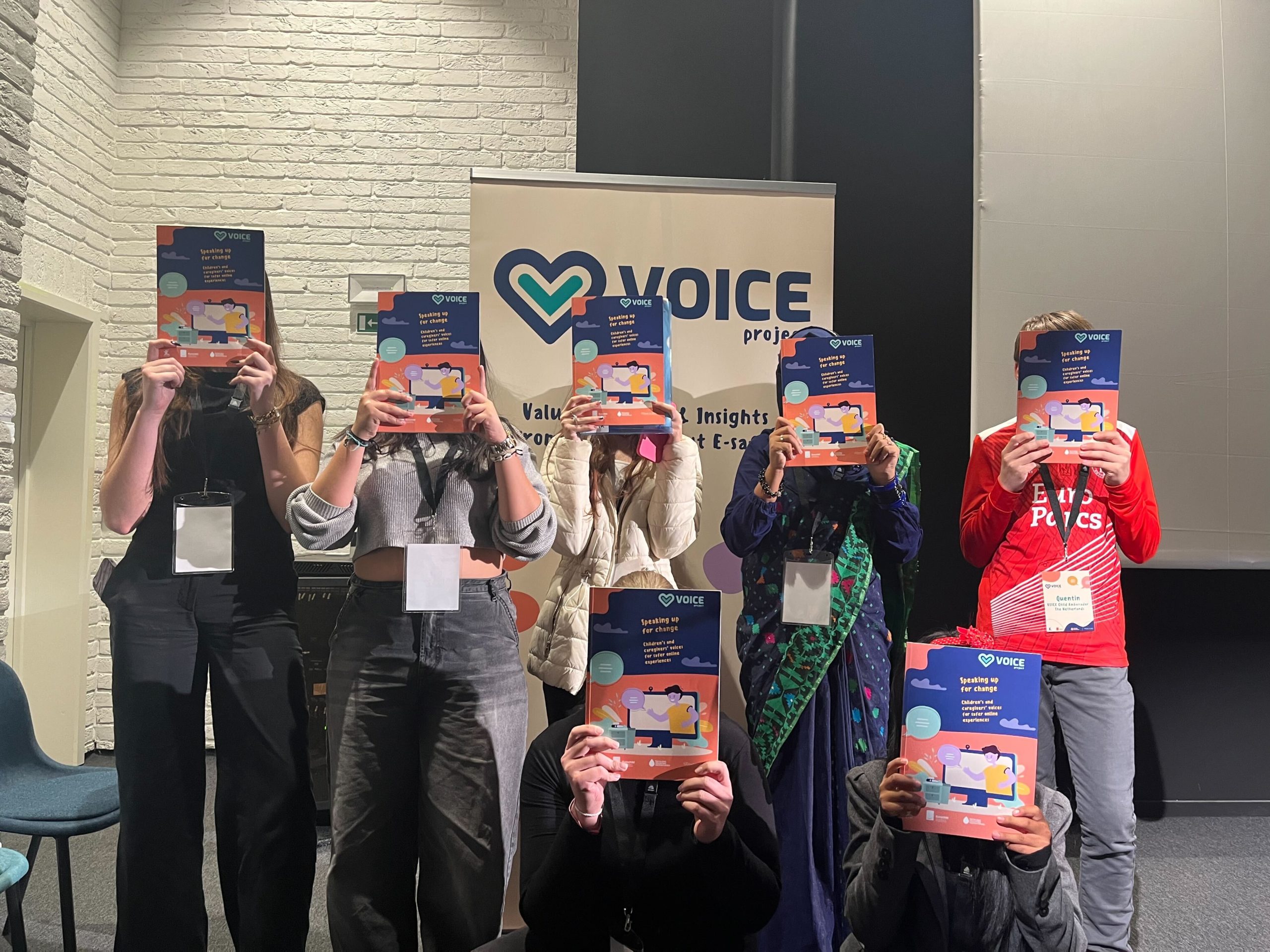
In response to these findings, ECPAT International, Eurochild, and Terre des Hommes Netherlands organised a groundbreaking event, “Speaking Up for Child Safety Online”, at the Institute of Natural Sciences in Brussels. With over 250 participants in attendance both in person and online, including representatives from the European Parliament, the European Commission, children themselves, and tech industry leads, the event served as a catalyst to discuss the future of child safety online and contribute to urgent debates taking place across the EU on this topic.
“The evolving nature of children's needs online requires online safety approaches that empower them to make safe choices online. For this, it is key to involve children in creating safer digital environments where they thrive.” - Fabiola Bas Palomares, Lead Policy and Advocacy Officer Online Safety - Eurochild